What Is Music Royalty Tokenization? A Plain-English Guide (2026)
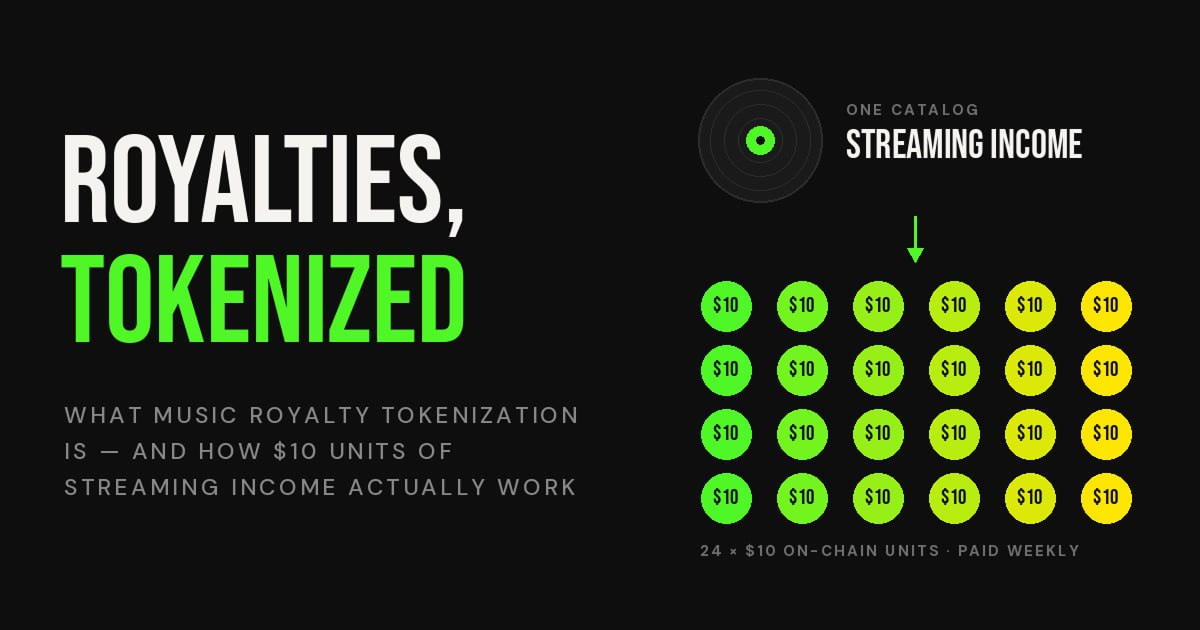
Music royalty tokenization is the process of converting the right to receive income from songs — streaming royalties — into digital tokens recorded on a blockchain. Each token represents a fractional claim on a defined royalty stream, letting investors buy small stakes in music income and receive automated payouts, typically in stablecoins.
That's the definition. Here's everything behind it — how it actually works, what you own, why it exists, and what can go wrong.
The short answer
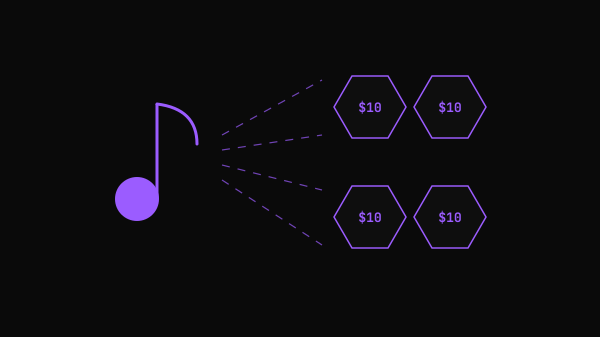
For seventy years, music royalties were an asset only institutions could touch. Buying royalty income meant seven-figure minimums, months of legal work, and no way out of the position. Tokenization changes the packaging, not the asset: the royalty income is exactly the same money flowing from Spotify, Apple Music and other platforms — but it's divided into units small enough for anyone to buy (on Ripe, from $10), recorded on a public ledger, and paid out automatically by smart contracts.
The result is that a $40 investor and a $40 million fund can now hold economically similar claims on the same kind of cash flow. That has never been true in music before.
How music royalty tokenization works — step by step
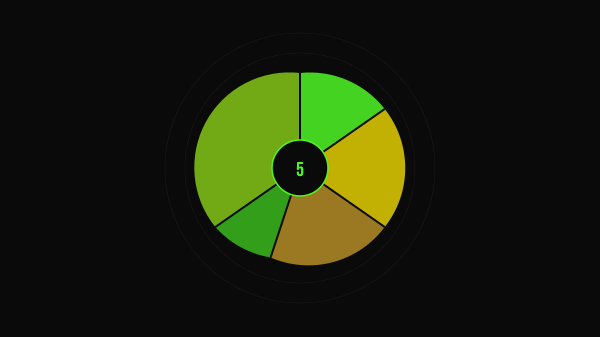
The mechanics are simpler than the terminology suggests. A typical tokenization pipeline has five stages:
- An artist or rights holder commits an income stream. A musician (or label, or catalog owner) agrees to sell a share of the future streaming income from specific songs — usually keeping ownership of the music itself.
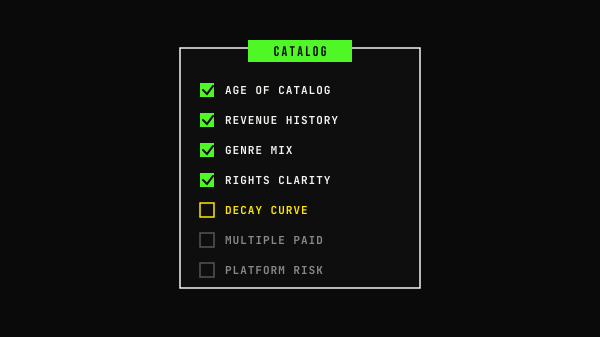
- The stream is valued. The catalog's streaming history is analyzed to estimate future income and set a fair price. On modern platforms this is model-driven and takes days; traditional catalog appraisals took analysts months.
- Tokens are issued. The income stream is legally assigned to a structure whose economics are split into digital units — on Ripe, $10 units recorded on Arbitrum, an Ethereum layer-2 network.
- Investors buy in. Buyers fund accounts and purchase tokens; ownership of each unit is recorded on the blockchain rather than in a private spreadsheet.
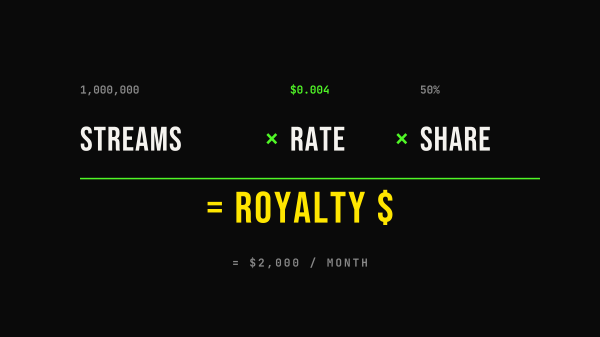
- Income flows automatically. As streaming platforms pay royalties, the money is collected and distributed to token holders by smart contract — on Ripe, every Friday, in dollar-pegged stablecoins (USDT/USDC).
The blockchain's role is narrow but decisive: it is the record-keeping and payment rail that makes thousands of $10 positions economically viable. Handling that many micro-stakes with lawyers, registrars and bank wires would cost more than the stakes themselves.
What does a royalty token holder actually own?
A royalty token is a claim on income, not ownership of the song. In the standard structure, the holder owns the right to a proportional share of the cash generated by a defined royalty stream for a defined scope — not the copyright, not the master recording, and not creative control. The artist keeps the music; the investor holds the economics.
This distinction matters in both directions. Investors are buying yield, not memorabilia: the token's value rests on real streaming cash flow, not on fandom. And artists are raising capital without surrendering their catalog — which is precisely why partial monetization exists as an alternative to selling everything to a major label.
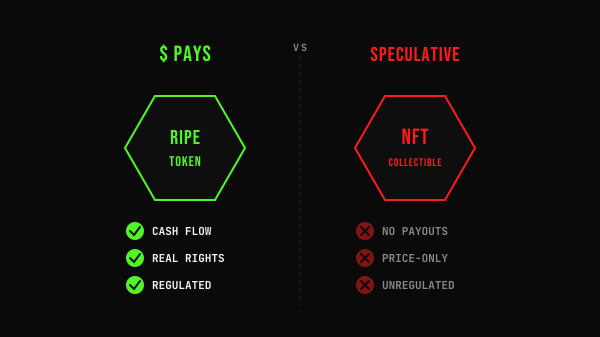
One more distinction worth internalizing: tokenized royalties are generally securities. Serious platforms structure and disclose them accordingly. A royalty token is not a cryptocurrency that floats on speculation — it is a regulated financial claim that happens to use crypto rails for record-keeping and payment.
Why tokenize royalties at all?
Fractional music investing existed before blockchains. What tokenization adds is a cost structure and feature set the older packaging can't match:
- Radically lower minimums. Legacy royalty marketplaces cluster around $5K–$100K+ entry points; institutional song funds start at millions. Tokenized units bring the floor to $10 — because near-zero marginal cost per unit is only possible when the ledger and payouts are automated.
- Frequent, automated income. Traditional royalty vehicles distribute quarterly, biannually, or "per release." Smart-contract distribution makes weekly payouts operationally trivial — Ripe has executed 60+ consecutive weekly cycles.
- Liquidity by design. Classic royalty purchases lock money up for years. Tokenized platforms can offer built-in exits — on Ripe, investors can sell their stake back to the platform rather than waiting for a thin secondary market.
- Transparent, standardized pricing. On-chain records plus model-driven valuation create a visible benchmark in a market that historically had none: no standard multiple, no public comps, no liquid venue.
How big is this market in 2026?
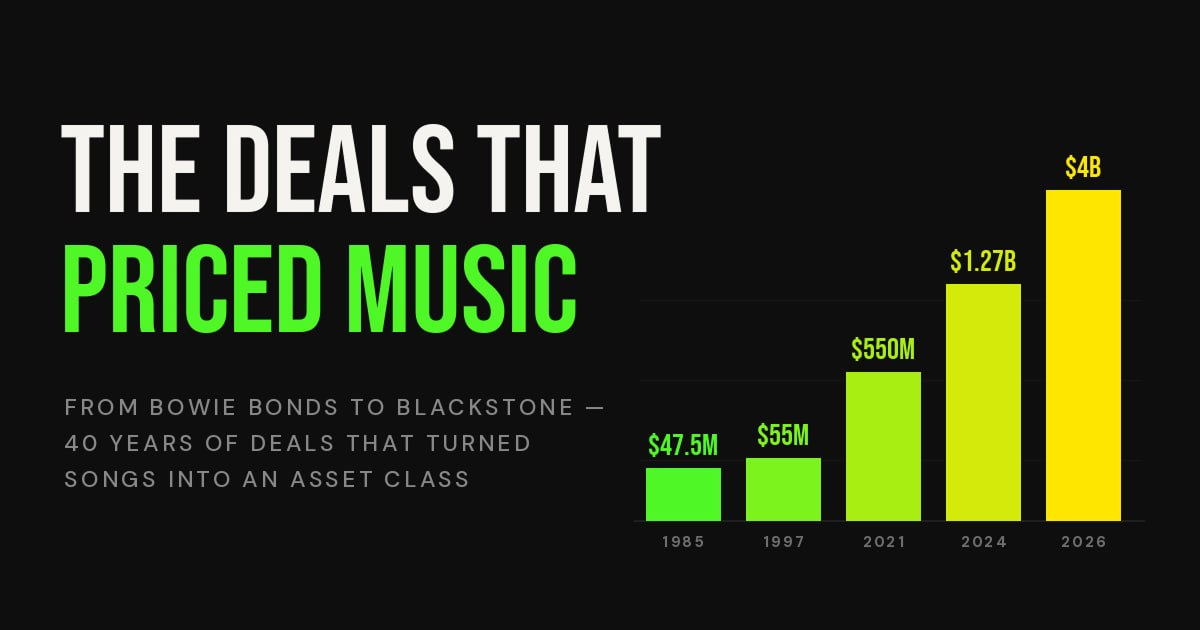
The underlying asset is large and institutionally validated. Global recorded music revenue reached $31.7 billion in 2025 — its eleventh consecutive year of growth — driven by 837 million paid streaming subscribers. Institutions have priced the asset class with tens of billions of dollars: Blackstone, Apollo and KKR built billion-dollar royalty positions, over $4.4 billion of music-backed bonds were issued in 2025 alone, and in 2026 Sony agreed to acquire the ex-Hipgnosis catalog portfolio for a reported ~$4 billion.
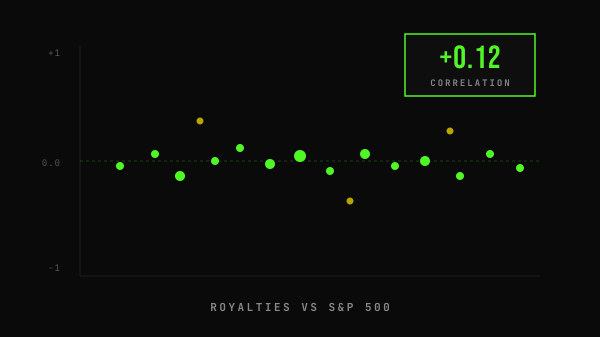
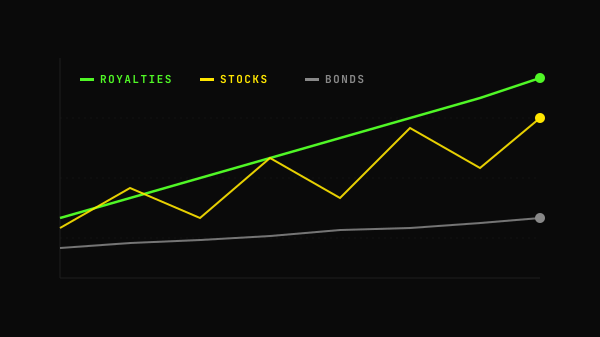
The tokenized layer on top of that asset is early but riding a much larger wave: consulting and industry forecasts project tokenized real-world assets (RWA) reaching as much as $18.9 trillion by 2033, with income-generating assets — treasuries, credit, real estate, and now royalties — leading the migration on-chain. Music royalties are a natural candidate: contractual cash flows, measurable via streaming data, and largely uncorrelated with stock markets.
The honest part: what can go wrong
Tokenization changes the packaging of royalty income — it does not change the risks of the underlying asset, and it adds a few of its own. A fair list:
- Income risk. Streaming income varies with listening trends. Catalogs decay, spike (ask anyone who watched a 15-year-old Katy Perry single top TikTok in 2026), and decay again. Diversified pools smooth this; they don't eliminate it.
- Valuation risk. If a catalog is bought at too high a multiple, tokens on top of it inherit the overpayment. Model-driven pricing helps standardize — it doesn't guarantee.
- Platform risk. The token is only as good as the legal structure and the operator behind it. Questions worth asking of any platform: who legally holds the royalty rights, what happens to income flow if the platform disappears, and how are investor claims protected.
- Regulatory risk. Rules for tokenized securities continue to evolve across jurisdictions. Platforms that treat tokens as regulated securities from day one are structurally safer than those that don't.
- Liquidity risk. "Liquid" is a design goal, not a law of nature. Platform-provided redemption depends on the platform's mechanics; token markets can be thin.
None of these are reasons to avoid the asset — they're the questions a sensible investor asks before allocating. The same questions apply, with worse answers, to most traditional royalty vehicles.
FAQ
Is music royalty tokenization the same as buying song NFTs?
No. Song NFTs are typically unique collectibles whose value rests on scarcity and fandom. Royalty tokens are fungible fractional claims on income — their value rests on cash flow. Early "music NFT" experiments sold single-song exposure with irregular payouts; tokenized royalty platforms sell diversified income with scheduled distributions.
Do artists lose their music when royalties are tokenized?
No. In the standard model the artist sells a share of future income from defined songs and keeps ownership of the music, the masters and creative control. That is the core difference from selling a catalog outright to a label or fund — a sale transfers both the upside and the control; tokenization monetizes income while the artist keeps the asset.
How do investors make money from royalty tokens?
Two ways: income and exit. Income comes from the periodic distributions generated by streaming — on Ripe, weekly stablecoin payouts. Exit comes from selling the position — on platforms with built-in liquidity, back to the platform itself. Total return depends on the price paid for the income stream relative to what it actually generates.
Are tokenized royalties a cryptocurrency investment?
Not in the speculative sense. The token uses crypto infrastructure — a blockchain ledger and stablecoin payments — but its value is anchored to real-world royalty cash flow, not to token-market sentiment. Think of the blockchain as the plumbing, not the product. Payouts in dollar-pegged stablecoins mean investors aren't taking crypto price risk on their income.
What's the minimum investment?
It depends on the platform. Legacy royalty marketplaces typically start around $5,000 and run to six figures; institutional funds are millions. Tokenized platforms brought minimums down dramatically — Ripe's entry point is $10, which is the practical proof of what tokenization changes: the cost of serving a small investor.
Investing involves risk, including possible loss of principal. This article is for informational purposes only and does not constitute investment, legal, or tax advice. Regulatory treatment of tokenized securities varies by jurisdiction.